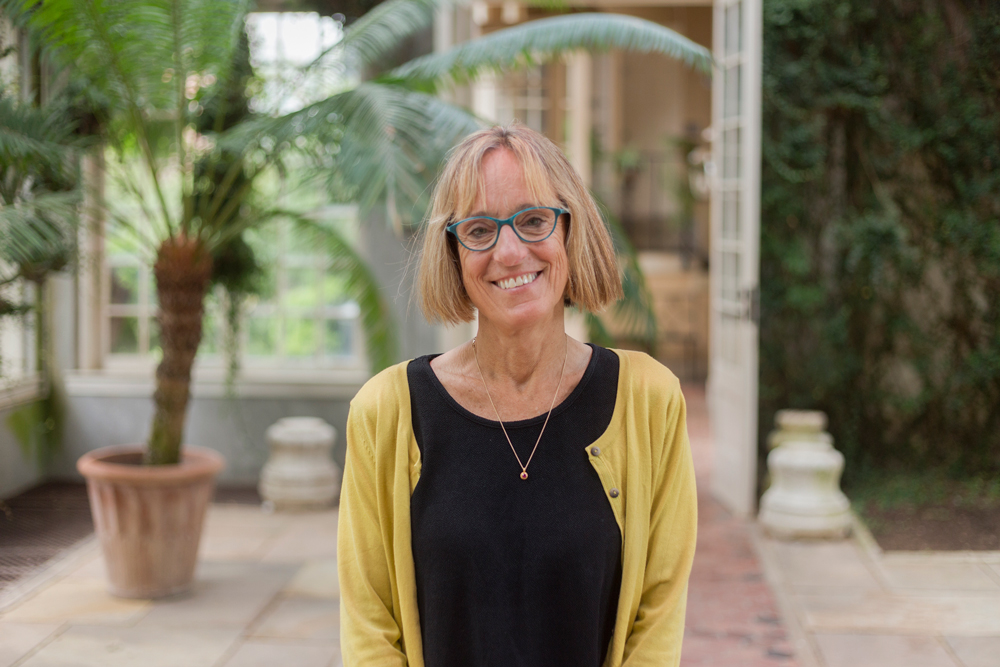
Dr. Thaïsa Way is the director of the UBC School of Architecture + Landscape Architecture. Her five year term began on January 1, 2026.
Dr. Way was the Director of Garden and Landscape Studies at Dumbarton Oaks, where she led the Democracy and Landscape: Race, Identity, and Difference Initiative. She was a Visiting Professor of Landscape Architecture at the Harvard University Graduate School of Design, and is Professor Emerita at the University of Washington College of Built Environments, where she was elected Chair of Faculty Senate. Dr. Way holds a PhD in the History of Architecture and Urbanism from Cornell University College of Architecture, Art, and Planning, a Master of Architectural History from the University of Virginia School of Architecture, and a Bachelor of Science in Conservation and Natural Resources from the University of California, Berkeley College of Natural Resources.
A scholar of the history, theory, and design of the built environment, Dr. Way’s research, publications, and courses challenge the field’s established narratives of gender, class, and race. She is a founding leader of Built Environment Deans Advancing Change, an initiative to establish a community of under-represented early career design school faculty from a diversity of backgrounds and experiences. She is a Fellow of the American Academy in Rome (2016), where she was the Mercedes T. Bass Landscape Architect in Residence in 2023, and an elected Fellow of the American Society of Landscape Architects (2018). She currently serves on the Board of Directors of the Society of Architectural Historians, and as an advisor for Snøhetta.
Dr. Way is the recipient of a number of teaching and research grants, including awards from the Mellon Foundation and Bullitt Foundation, and most recently from the National Endowment for the Humanities. Her publications and teaching have been been extensively awarded, including a CELA Outstanding Educator Award in 2020. Her latest publication, Segregation and Resistance in American Landscapes (co-edited with Eric Avila), draws from the Dumbarton Oaks-hosted symposium of the same name to examine the role of space, place, and land in the narratives of racial segregation.